
Hair Loss Has Clues: Telogen Effluvium vs Alopecia Areata
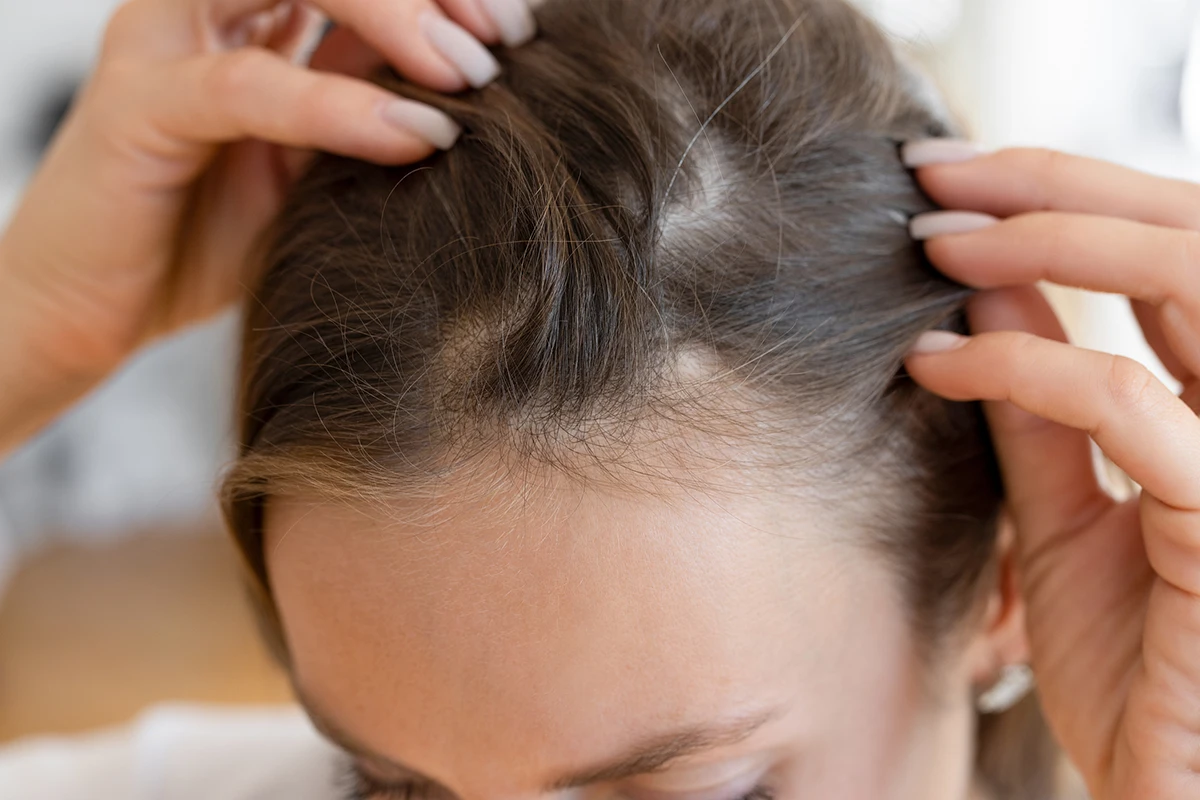
You have noticed more hair falling out than usual. But is it shedding, or is your hair disappearing in patches? Both experiences are alarming, yet they can point to very different processes beneath the surface. Telogen effluvium vs alopecia areata comes down to three clues: timing, pattern, and what is happening in the follicle.
These two conditions are among the most commonly confused types of hair loss, and they fit into the bigger picture of understanding hair loss.
Clue 1: When Did the Hair Loss Begin?
Timing is often the first hint. Telogen effluvium typically appears a few months after a trigger, with a delay ranging from about one to six months, so the cause may feel long gone by the time shedding starts, which is why many people search for telogen effluvium vs alopecia once they notice thinning.
Common triggers include a high fever, major surgery, childbirth or other hormonal changes, crash dieting, and certain medications. Women tend to be more susceptible because of postpartum hormonal changes, which is one reason female hair loss is such a frequent concern.
Alopecia areata vs telogen effluvium is partly a question of timing, because alopecia areata runs on a different clock. It can cause sudden, noticeable hair loss as patchy hair loss in distinct spots, and the course afterward is unpredictable.
Clue 2: What Does the Hair Loss Pattern Look Like?
Telogen effluvium is diffuse, meaning hair thins across the whole scalp rather than in one spot, and the scalp itself looks normal. Alopecia areata more often leaves smooth, round patches, which can also appear in the beard or eyebrows. In other words, it is diffuse shedding vs patchy hair loss.
Patterns can vary, though, and appearance alone cannot confirm a diagnosis. In fact, clinical references list alopecia areata among the conditions doctors consider when evaluating telogen effluvium.
Doctors sometimes add a gentle pull test. If four or more hairs come out, telogen effluvium is likely, while large bald patches suggest otherwise. This test is best left to a professional.
Clue 3: What Might Be Happening Beneath the Surface?
In telogen effluvium vs alopecia areata, the biggest difference is invisible: what is happening at the follicle. With telogen effluvium, a larger-than-usual number of hairs enter the shedding phase together, so you may lose closer to 300 hairs a day instead of the usual 100.
Alopecia areata is an autoimmune condition in which the immune system mistakenly attacks hair follicles. That is why this autoimmune hair loss and stress hair loss call for very different approaches.
To go deeper on the condition itself, read about telogen effluvium: condition page URL to confirm.
Telogen Effluvium vs Alopecia Areata: Side-by-Side Comparison
Here is how alopecia areata vs telogen effluvium compare on the five points that matter most:
| Factor | Telogen Effluvium | Alopecia Areata |
|---|---|---|
| Onset | A few months after a trigger | Can appear quickly, often as new patches |
| Pattern | Diffuse shedding across the scalp | Patchy hair loss in distinct spots |
| Common triggers | Illness, surgery, hormonal changes, crash dieting, some medications | Autoimmune hair loss with a cause that is not fully understood |
| Scalp appearance | A normal-looking scalp | Smooth, round bare patches |
| Typical course | Usually self-limited | Unpredictable, with regrowth possible but not guaranteed |
The Emotional Side of Not Knowing
The uncertainty of not knowing why your hair is falling out can be as distressing as the hair loss itself. Telogen effluvium can have a significant psychological impact, even though it is not dangerous.
There is room for reassurance. Telogen effluvium is benign and spontaneously reversible, and limited patchy hair loss from alopecia areata may regrow on its own, although neither outcome is guaranteed for everyone.
A clear answer on telogen effluvium vs alopecia areata is often the first step toward feeling in control again.
Myth: Stress Is the Only Cause of Hair Loss
Stress can contribute to telogen effluvium, but it is not the sole explanation for every case of hair loss. Many people use the phrase stress hair loss for any sudden shedding, yet other causes often play a role:
- Illness, high fever, or surgery
- Hormonal changes, including after childbirth
- Low iron, thyroid problems, or crash dieting
- Certain medications
- Autoimmune conditions such as alopecia areata
Practical Next Steps
If you are unsure about telogen effluvium vs alopecia, a few simple steps can help you prepare for an evaluation:
- Write down when the hair loss started, plus any illness, surgery, childbirth, or major diet change in the past six months.
- Take clear photos of your scalp every few weeks so any pattern is easier to see.
- Notice whether hair is changing anywhere else, such as the eyebrows, beard, or nails.
- Book an evaluation if you see patchy hair loss or if shedding lasts longer than six months.
Dr. Bapna is a double board-certified facial plastic surgeon with more than 20 years of experience, and he focuses on finding the cause of hair loss, including alopecia vs telogen effluvium questions, before recommending treatment. A visit typically includes a review of your health history and a scalp exam. If blood work or a dermatology referral is needed, he can point you in the right direction.
If another condition such as pattern hair loss turns out to be involved, he can also explain whether PRP hair restoration, non-surgical hair loss treatments, or an FUE hair transplant fit your situation.
Ready for clear answers about telogen effluvium vs alopecia areata? Schedule a hair loss consultation with Dr. Bapna.